
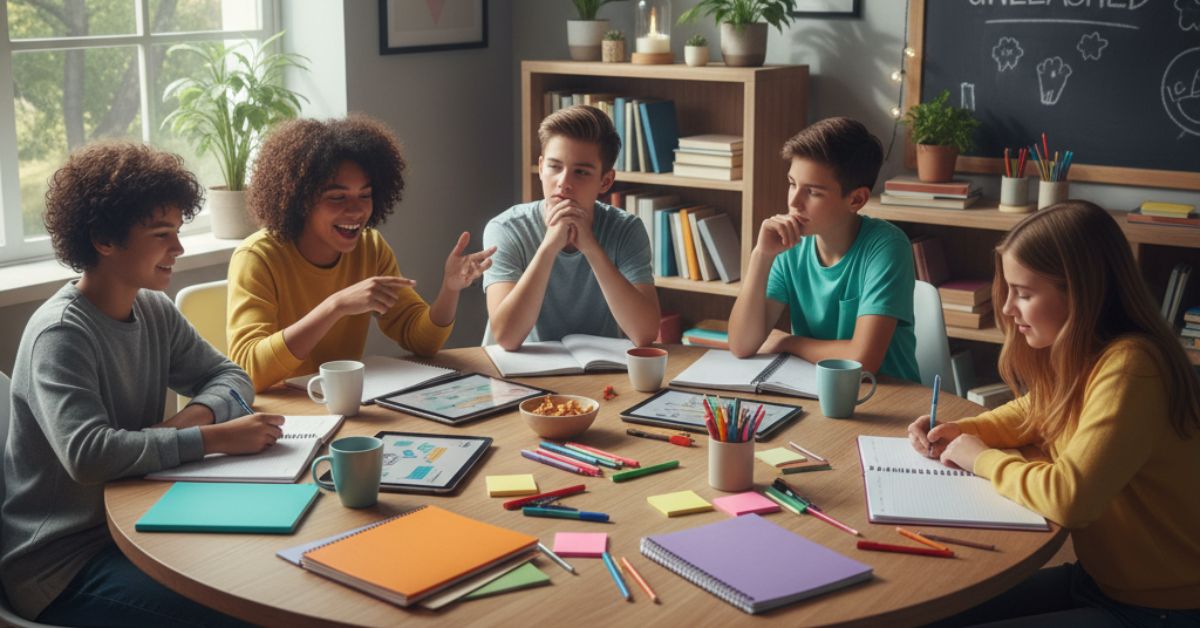










15 Problem Solving Scenarios for Teens to Build Real-World Skills

problem solving scenarios for teens

Our editorial team individually chooses every product that is suggested on obonappetite. We might get paid if you buy something after clicking on any of these links.

I remember being a teenager and feeling like every minor issue was a massive crisis. Adolescence brings a wave of intense emotions and complex social dynamics. Teens face pressures that test their boundaries daily. They need tools to help them navigate these turbulent years.

That is why I believe so strongly in teaching practical life skills. We can guide our youth by using problem solving scenarios for teens. These exercises offer a safe space to practice adolescent decision making. They help teenagers build resilience before a real crisis hits.

Problem solving scenarios allow teens to pause and reflect. Instead of reacting out of fear or anger, they practice emotional regulation. They learn to evaluate risks and consider the feelings of others. This approach builds empathy and strong social skills.

In this guide, I will share various problem solving scenarios. You can use these in a classroom, at the dinner table, or during therapy sessions. Let us explore how we can empower the next generation.

Social and Relationship Problem Solving Scenarios

Friendships define the teenage experience. A simple misunderstanding can quickly escalate into a painful conflict. Teens need practice to handle these situations with grace. We can use social problem solving scenarios for teens to spark meaningful conversations.

The Left-Out Friend

You notice a friend is constantly excluded when the group makes plans. They seem distant and hurt.
Scenario: How do you include them and show you value them?
These problem solving scenarios teach conflict resolution and empathy. I always encourage teens to put themselves in the excluded person’s shoes.

The Rumor Mill

Someone is spreading a false rumor about your best friend. Other students are starting to believe it.
Scenario: How do you support your friend? How do you handle the rumor responsibly?
These examples of problem solving scenarios with solutions help teens navigate toxic peer dynamics. They learn to communicate clearly and stand up for what is right.

Peer Pressure at a Party

Your friends want you to do something that makes you uncomfortable. They threaten to leave you out if you refuse.
Scenario: How do you stand your ground while maintaining respect?
Peer pressure solutions are vital for growing teens. Problem solving scenarios like this build confidence and self-awareness.

The Lost Phone

You find an expensive phone on the school bus. It has no identifying case or name.
Scenario: How do you return it while respecting the owner’s privacy?
This tests responsibility and accountability. Ethical dilemmas are perfect problem solving scenarios for high school students pdf materials you might print for a class.

Life Skills: "What If" Problem Solving Scenarios

Teens need practical skills to become independent adults. Good communication and quick thinking are essential for success. We can use “What if” problem solving scenarios to teach these concepts. These exercises bridge the gap between childhood and adulthood.

What If Problem Solving Scenarios

The Emergency Situation

You are hiking with friends, and someone badly twists their ankle. You are far from the main trail.
Scenario: What steps do you take to get help and stay safe?
I love using these problem solving scenarios to teach risk assessment strategies. Teens learn to stay calm and take action.

The Found Wallet

You find a wallet on the street with cash, an ID, and bank cards. No one is around.
Scenario: What do you do to ensure it gets back to the owner?
Honesty is a crucial trait to develop. This is one of those classic problem solving scenarios that tests moral character. It encourages teens to think beyond themselves.

Financial Choices

You receive some money for your birthday. You want to spend it on a fun day at a restaurant with friends, but you also need to save for a school trip.
Scenario: How do you decide how to manage this money?
Financial awareness is a vital skill. These problem solving scenarios teach teens how to balance immediate desires with long-term goals.

Academic Problem Solving Scenarios

School is a major source of stress for teens. They juggle homework, group projects, and extracurricular activities. We must provide problem solving scenarios to help them manage their time. These tools can reduce anxiety and improve academic performance.

The Unfair Group Project

You are working on a major paper for class. One group member refuses to do their share of the work.
Scenario: How do you address the issue fairly without starting a huge fight?
Conflict resolution is critical in any classroom setting. Problem solving scenarios like this teach effective communication skills development.

The Overwhelming Schedule

You have a mathematics test, a history paper, and a sports game all in one week. You feel completely overwhelmed.
Scenario: How do you prioritize your tasks and manage your time?
Time management challenges affect nearly every student. Using problem solving scenarios helps them practice goal setting activities. They learn to break large tasks into manageable steps.

The Cheating Dilemma

You studied hard for a test, but your friend did not. During the exam, they ask to copy your answers.
Scenario: How do you refuse without ruining the friendship?
This is a tough situation for any child. Problem solving scenarios prepare them to make the right choice under pressure. They learn that true friends respect boundaries.

How to Use Problem Solving Scenarios

You might be wondering how to actually implement these tools. There are many engaging ways to use problem solving scenarios for teens. You can adapt them for different learning environments and group sizes. I find that keeping things interactive yields the best results.

Group Discussions and Role-Playing

Present problem solving scenarios to a small group. Ask them to brainstorm solutions together. This boosts social–emotional learning and encourages teamwork.

You can also have them act out the situations. Role-playing brings problem solving scenarios to life. It helps teens practice their tone of voice and body language.

Writing and Reflection

Sometimes, teens need quiet time to process their thoughts. Ask them to write down their answers to various problem solving scenarios. You can easily find free problem solving scenarios for teens online to print as worksheets.

Writing helps with self-awareness exercises and emotional processing. It is a great technique used in speech–language pathology and therapy. It gives teens a safe outlet to explore complex feelings.

Finding Resources Online

There are countless resources available on the internet. You can search for problem solving scenarios for teens online to find fresh ideas. Many educators share social problem solving scenarios pdf files that you can download.

If you work with older groups, you might even look up problem solving scenarios for adults. Many of these overlap with the challenges older teens face. Having a library of problem solving scenarios makes classroom management much easier.

Empowering Teens for the Future

Raising and teaching teens is incredibly rewarding, but it takes patience. By using problem solving scenarios, we give them a massive advantage. We teach them how to think, rather than just telling them what to do.

Empowering Teens for the Future

They learn to handle conflict, manage their time, and practice empathy. These problem solving scenarios are more than just classroom games. They are the building blocks of a successful, independent life.


I encourage you to try these exercises with the teens in your life. Start a conversation over lunch or during a long car ride. You will be amazed at the thoughtful solutions they come up with. Let us help them build the mental health coping mechanisms they need to thrive.

Related Articles

Reference Links: We like

1. American Psychological Association – Critical Thinking & Problem Solving Resources
2. CASEL – SEL Framework (Decision-Making Skills)
3. Edutopia – Teaching Problem Solving Skills
4. Harvard Graduate School of Education – Helping Teens Build Life Skills
5. Understood.org – Problem-Solving Skills for Teens
6. Verywell Mind – Problem-Solving Techniques
7. MindTools – Problem Solving Skills Toolkit
8. Youth.gov – Youth Development Skills
9. Big Life Journal – Growth Mindset & Problem Solving for Teens
10. SkillsYouNeed – Problem Solving Skills Guide

Your Questions, Answered

How can problem-solving scenarios for teens strengthen social-emotional learning and problem-solving abilities?

Problem-solving scenarios for teens can strengthen social-emotional learning (SEL) by giving relatable, real-life situations that help students develop problem-solving skills and reasoning skills. When teens work through open-ended scenarios for kids or youth, they learn to analyze different perspectives, weigh possible outcomes, and find solutions independently or collaboratively. These learning experiences reinforce decision-making, perspective-taking, and creative solutions so students develop confidence to navigate everyday challenges and improve social-emotional skills.

Problem-solving activities and task cards designed for social scenarios present prompts that ask students to think critically about disagreement and conflict, consider possible solutions, and predict outcomes. Activities might include role-play, structured discussion, and worksheets that help students analyze cause and effect and practice conflict resolution skills. These formats help students build critical thinking and problem-solving strategies while reinforcing social-emotional learning and reasoning skills in real-life situations.

Using problem-solving strategies in scenarios for teens teaches conflict resolution by modeling a step-by-step problem-solving process: identify the issue, generate possible solutions, weigh pros and cons, choose an action, and reflect on the outcome. By practicing with relatable prompts and social scenarios, teens learn to ask questions, consider different perspectives, and make thoughtful decisions. Repeated practice helps strengthen problem-solving abilities and prepares students to handle everyday challenges more independently.

Yes, a free download worksheet or set of task cards can be an effective tool to help students practice social-emotional problem-solving and reasoning skills. Worksheets often include prompts that encourage teens to analyze situations, list possible solutions, and reflect on outcomes, while task cards enable short, focused activities suitable for group or individual use. These resources help reinforce SEL, help students think critically, and give teachers practical materials to help your students develop problem-solving abilities.

Real-life problem-solving scenarios for teens might include disagreements with friends, planning group projects, dealing with peer pressure, or managing time for school and extracurriculars. Effective prompts are open-ended and ask students to identify the issue, consider different perspectives, generate possible solutions, and predict outcomes. These social scenarios and prompts help teens practice decision-making, analyze consequences, and build conflict resolution skills, ultimately helping them solve problems and navigate everyday challenges.

Related Post

Leave a Reply

Your email address will not be published. Required fields are marked *