

Our editorial team individually chooses every product that is suggested on obonappetite. We might get paid if you buy something after clicking on any of these links.
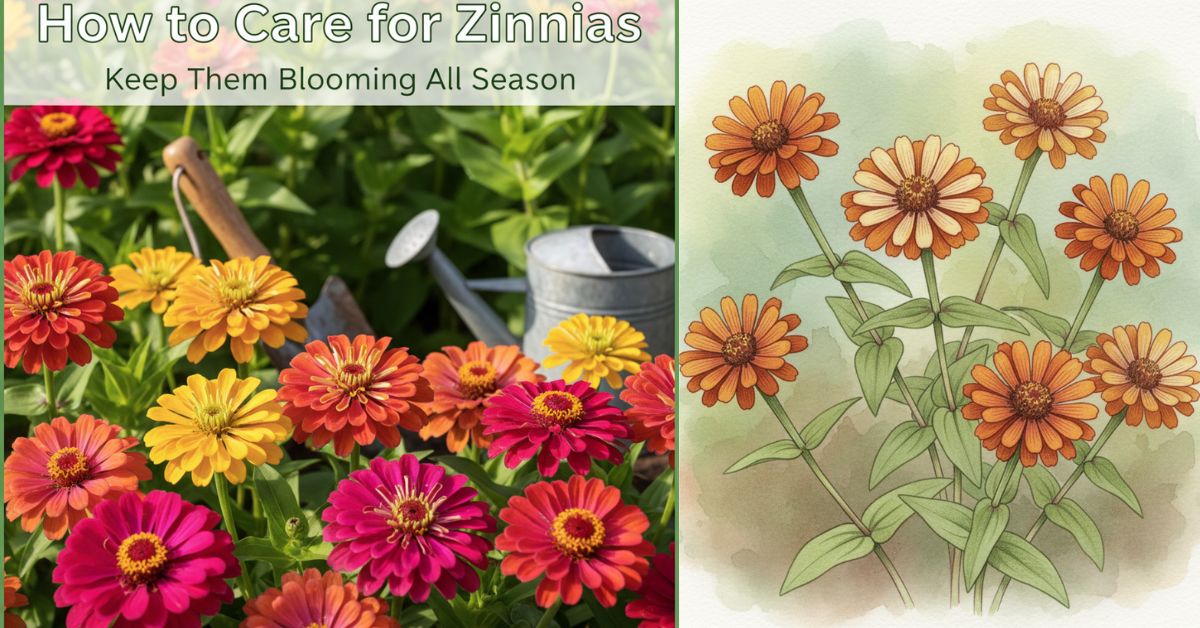
The zinnia flower is a celebration of color and simplicity. Originally from Mexico, zinnias have become one of the most loved garden flowers around the world. Their bold, round blooms sit proudly on tall, slender stems, creating a lively display that feels almost like a festival of colors. From soft pastels to fiery reds and oranges, each flower looks like a tiny burst of sunshine.
Zinnias are known for their strength and resilience. They thrive in warm weather, love full sunlight, and continue blooming generously from early summer until the first frost. Because they grow easily from seeds and require minimal care, they are perfect for beginner gardeners. Even a small patch of soil can turn into a bright canvas when zinnias are planted.
Beyond their beauty, zinnias play an important role in nature. They attract butterflies, bees, and other pollinators, bringing movement and life into the garden. In the language of flowers, zinnias often symbolize friendship, endurance, and lasting affection. Their long-lasting blooms also make them wonderful cut flowers, staying fresh in vases for many days.
Zinnias come in a variety of shapes, sizes, and colors, making them a favorite in gardens and flower beds.
Here is a clear overview of types of Zinnias
Zinnia elegans (Common Zinnia): The most popular species, with large, often double blooms.
Zinnia angustifolia – Known as narrow-leaf zinnia, these have smaller flowers, fine foliage, and are heat-tolerant.
Zinnia haageana– Often called the Mexican zinnia, it has vibrant, daisy-like flowers and grows compactly.
Dwarf Zinnias – Small, bushy plants perfect for containers and borders, usually 6–12 inches tall.
Giant or Large-Flowered Zinnias – Tall varieties that can reach 2–3 feet, with large, full blooms that look like pompoms.
Single vs Double Blooms– Single zinnias have one layer of petals with a visible center, attracting pollinators, while double zinnias have multiple layers of petals for a fuller, decorative look.
Zinnias also come in a rainbow of colors—red, pink, yellow, orange, white, and even bi-color—so you can mix and match for stunning garden displays.
Zinnias earn their place in pollinator gardens across the United States. Bees, butterflies, hummingbirds, and moths visit these flowers regularly for nectar. Their bold petals come in red, pink, orange, purple, coral, apricot, peach, raspberry, and even pastel shades.
These flowers excel as cut flowers too. Their sturdy stems and long vase life make them perfect for flower bouquets and floral design projects. You can create stunning arrangements in shades ranging from bold salmon to soft lavender purple.
Zinnia elegans is the most common species you’ll find. It adapts well to different climates, from the heat of the Southwestern United States to cooler northern regions. Most varieties handle heat and drought better than many ornamental plants.
Companion planting works beautifully with zinnias. I grow them alongside roses, dahlias, and lavender for a colorful, layered effect. Their height variations—from compact six-inch varieties to tall three-foot stems—offer design flexibility in raised-bed gardening or traditional garden layouts.
Caring for zinnias starts with understanding their basic needs. These annual plants prefer simple, consistent care rather than complicated routines.
Wait for the right time – Let the flowers fully bloom and fade naturally. The petals will dry and fall off, and the center of the flower (the seed head) will turn brown and dry. This usually happens a few weeks after blooming.
TIP: Label the seeds with the variety and date to keep your garden organized!
Proper spacing prevents disease and promotes healthy growth. Crowded zinnias trap moisture between leaves, creating conditions where mildew and fungus thrive.
For smaller varieties, maintain six to twelve inches between plants. Taller varieties need twelve to eighteen inches of space. This spacing ensures each plant receives adequate sunlight and airflow.
I learned this lesson after planting zinnias too close together one season. The dense foliage trapped moisture, leading to powdery mildew on the leaves. Proper spacing prevents this frustrating problem.
How to plant zinnia seeds:
Planting zinnia seeds is easy and rewarding!
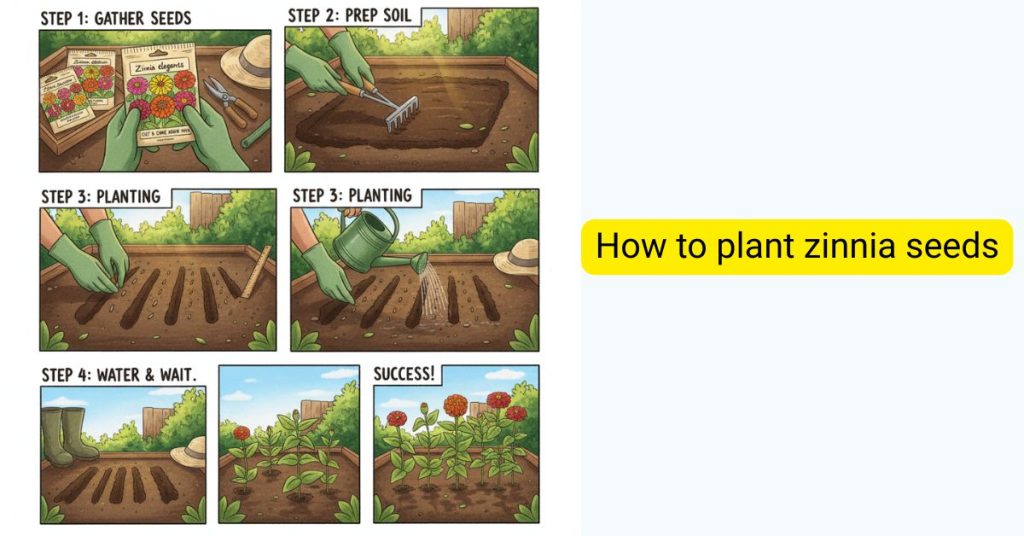
Start by choosing a sunny spot with well-draining, fertile soil. Sow the seeds about a quarter-inch deep, spacing them 8–12 inches apart for smaller varieties and 12–24 inches for larger ones. Water gently to keep the soil moist but not soggy, and ensure the seeds receive at least 6–8 hours of sunlight each day. Within a week or two, the seeds will germinate, and tiny seedlings will emerge. As they grow, thin the weaker seedlings to give the strongest plants plenty of room, and continue to care for them with regular watering and occasional deadheading for long-lasting, vibrant blooms.
Zinnias need specific conditions to produce their best blooms. Getting these fundamentals right sets you up for success.
Full sun is essential for zinnias. They need six to eight hours of direct sunlight daily. Insufficient light produces weak stems and fewer flowers.
Plant them in the sunniest spot in your garden. Avoid areas with afternoon shade or spots blocked by buildings. Maximum sun exposure encourages vigorous growth and abundant blooms.
Zinnias grow best in well-draining, fertile soil that is rich in organic matter. They prefer soil with a slightly acidic to neutral pH, around 6.0 to 7.5. Loose, crumbly soil allows their roots to spread easily and absorb nutrients efficiently, which supports strong growth and vibrant blooms. Adding compost or aged manure can improve soil fertility and moisture retention, but it’s important to avoid waterlogged conditions, as zinnias do not like soggy soil. Good soil not only nourishes the plants but also helps prevent diseases and encourages long-lasting flowers.
Watering Guide For Zinnia
a.Water regularly, especially during hot and dry weather.
b.Keep the soil moist but not soggy.
c.Always water at the base of the plant, not on the leaves.
d.Water in the morning so the soil can absorb moisture before the heat of the day.
Zinnias are somewhat drought-tolerant once established, but consistent watering helps them bloom beautifully.
How often should you water zinnias? Newly planted zinnias need consistent moisture until established. Water deeply two to three times weekly during this period.
Once established, zinnias show impressive drought tolerance. Water when the top inch of soil feels dry. Deep, infrequent watering encourages strong root development.
I prefer drip irrigation for my zinnias. It delivers water directly to the root zone while keeping foliage dry. Wet leaves invite disease problems like mildew and bacterial infections.
Avoid overhead watering, especially in humid climates. Morning watering gives plants time to dry before evening temperatures drop. This simple timing adjustment reduces disease risk significantly.
Can you grow zinnias in pots? Absolutely. Container gardening works beautifully for zinnias, especially on patios or balconies with limited space.
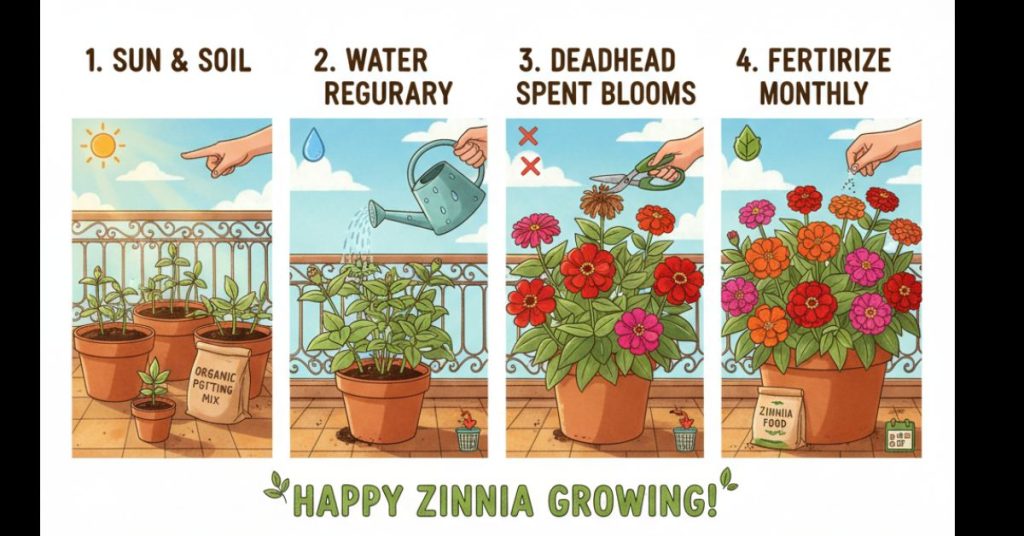
Choose containers at least twelve inches deep with drainage holes. Fill them with quality potting soil designed for containers. Garden soil compacts in pots and drains poorly.
Potted zinnias dry out faster than those in garden beds. Check soil moisture daily during hot weather. Water when the top inch feels dry to the touch.
Container plants need more frequent fertilization than garden plants. Use a balanced, water-soluble fertilizer every two to three weeks during the growing season.
Deadheading zinnias is the secret to continuous blooms. This simple practice redirects the plant’s energy from seed production to flower creation.
Deadheading Technique
Remove spent flowers by cutting the stem just above the next set of leaves. Use clean pruning shears or sharp scissors for smooth cuts. This encourages new stems to develop from that point.
I deadhead my zinnias every few days during peak bloom time. It takes just minutes but doubles the flower production. The plant keeps pushing out fresh blooms rather than setting seed.
How to Deadhead Zinnias in Pots
The same deadheading principles apply to container zinnias. Snip off faded blooms regularly to maintain compact growth and encourage branching.
Potted zinnias benefit from light pruning throughout the season. Pinch back leggy growth to promote bushier plants. This creates fuller containers with more flowers.
Pruning for Shape and Health
Beyond deadheading, remove any diseased or damaged leaves immediately. This prevents problems from spreading. Cut affected foliage back to healthy tissue.
If your zinnias develop powdery mildew—a common fungal disease—increase air circulation by thinning crowded growth. Remove lower leaves that touch the soil to reduce moisture contact.
Spacing
Zinnias need plenty of space to grow healthy and strong. Plant them about 8 to 12 inches apart for smaller varieties and 12 to 24 inches apart for larger ones. Proper spacing ensures good air circulation, reduces the risk of diseases like powdery mildew, and gives each plant enough room to develop vibrant flowers. Crowded zinnias can become leggy and produce fewer blooms, so giving them space is key for a colorful, thriving garden.
Fertilizing Guide For Zinnia
Proper fertilizing helps zinnias grow strong and produce bright, long-lasting blooms. Apply a balanced fertilizer occasionally to encourage healthy growth and more blooms.
Zinnias are easy to grow, but a few things can slow them down! Powdery mildew can appear as a white coating on leaves, especially if plants are crowded or humidity is high. Watch for pests like aphids, spider mites, and caterpillars that nibble on leaves and flowers. Overwatering or poor drainage can cause root rot, while too little sunlight makes stems weak and flowers sparse. Keep your zinnias healthy by spacing them well, watering at the base, removing affected leaves, and checking for pests regularly. Zinnias do not tolerate frost. Protect them from cold temperatures.
With proper care, zinnias will bloom beautifully from summer until the first frost, adding bright color to your garden.
Related Posts
How to Germinate Flower Seeds | Step-by-Step for Strong, Healthy Sprouts
How to Plant a Sunflower Seedling | Easy Steps for a Healthy Bloom
The Spruce – Growing Zinnias: A Complete Guide
Better Homes & Gardens – Zinnia Care Tips
Garden Design – Zinnia Growing Guide
Old Farmer’s Almanac – How to Grow Zinnias
David Austin Roses – Zinnia Care Guide
American Meadows – Growing Zinnias in Your Garden
University of Illinois Extension – Zinnia Care
Southern Living – Zinnia Growing Guide
Royal Horticultural Society – Zinnia Care
Fine Gardening – Tips for Growing Zinnias
Yes, zinnias thrive in containers when given proper care. Choose pots at least twelve inches deep with drainage holes. Use quality potting soil and water more frequently than garden-planted zinnias. Container plants dry out faster and need regular fertilization every two to three weeks.
Water newly planted zinnias two to three times weekly until established. Mature zinnias show drought tolerance and need watering only when the top inch of soil feels dry. Deep, infrequent watering develops stronger roots than frequent shallow watering. Use drip irrigation or water at soil level to keep foliage dry.
Common zinnia pests include aphids, spider mites, Japanese beetles, and whiteflies. Prevent infestations by maintaining healthy plants through proper watering and fertilization. Remove pests manually when possible. Use insecticidal soap or horticultural oil for serious problems. Encourage beneficial insects like ladybugs that eat aphids naturally.
Plant zinnia seeds after the last frost date when soil temperatures reach at least 60°F. Cold soil prevents germination and may rot seeds. In most regions, this means late spring planting. For earlier blooms, start seeds indoors three to four weeks before transplanting outside.
Zinnias aren’t heavy feeders but benefit from monthly fertilization during the growing season. Apply balanced fertilizer at planting time, then switch to bloom-boosting formulas higher in phosphorus. Organic options like compost tea work well. Avoid over-fertilizing, which produces lush foliage but fewer flowers.










Our editorial team individually chooses every product that is suggested on obonappetite. We might get paid if you buy something

Our editorial team individually chooses every product that is suggested on obonappetite. We might get paid if you buy something

Our editorial team individually chooses every product that is suggested on obonappetite. We might get paid if you buy something